
French Accentby Maxime
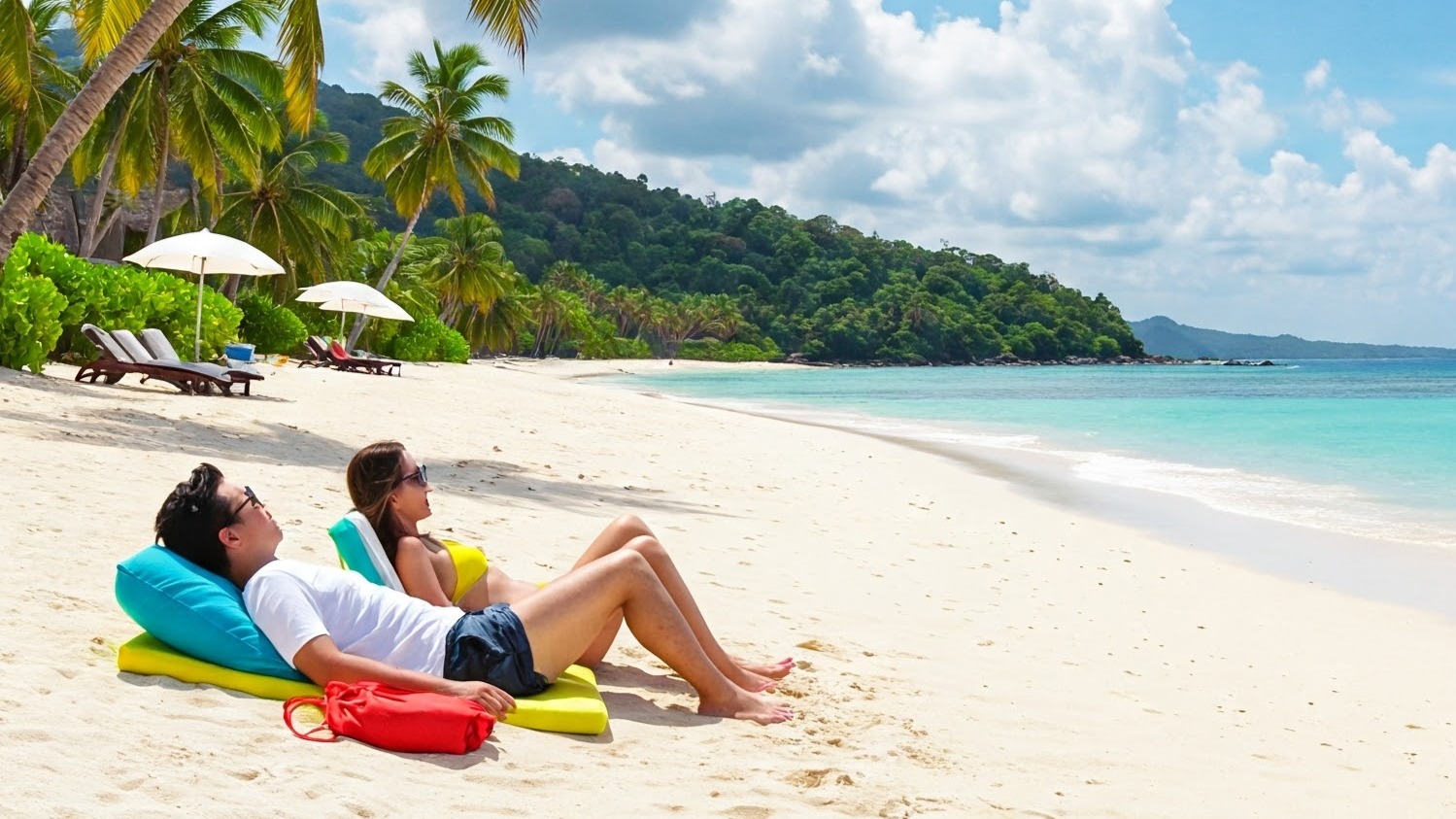
Sharing your travel memories is the best way to practice real, "living" French. In this guide, we’ll get straight to the point: learn how to name your destination, describe your accommodation, and use the past tense to create genuine connections during your conversations.
For countries, we usually use "En" or "Au":
💡 Vacation is finally the time to enjoy your passions! Check out my lesson to learn how to talk about your hobbies in French.
To talk about a completed past event, we use the passé composé. It is the most essential tool for your French conversations.
| Personne | Singulier | Pluriel |
|---|---|---|
| 1ère | J’ai visité... | Nous avons mangé... |
| 2ème | Tu as pris... | Vous avez aimé... |
| 3ème | Il/Elle a nagé... | Ils/Elles ont adoré... |
| Personne | Singulier | Pluriel |
|---|---|---|
| 1ère | Je suis allé(e) | Nous sommes restés |
| 2ème | Tu es parti(e) | Vous êtes arrivés |
| 3ème | Il/Elle est arrivé(e) | Ils/Elles sont venus |
💡 Maxime's Tip: Don't look for immediate perfection! If you confuse "au" and "en" while speaking, your French friends will still understand you perfectly. The most important thing is to share your adventure!
👩 Amélie : Salut Thomas ! Tu as passé de bonnes vacances ? (Did you have a good vacation?)
🧑 Thomas : Oui, super ! Je suis allé à la montagne en train. Nous avons dormi dans un gîte très calme. Et toi ?
👩Amélie : Je suis allée en Italie en avion. J'ai loué un appartement avec des amis près de la mer. Il a fait très beau !
🧑Thomas : Ah, sympa ! Vous avez mangé des spécialités ?
👩Amélie : Oui, on a mangé des pâtes incroyables et j'ai pris beaucoup de photos.
🚀 Are you going to meet new people during your trip? Learn the basics with my guide on introducing yourself in French!
Want to improve your spoken French?
Practice conversation with meWrite one or two sentences about your vacation below (Example: "Je suis allé au Japon en avion et j'ai dormi dans un bel hôtel"). I will personally reply to help you improve! 👇
Commentaires